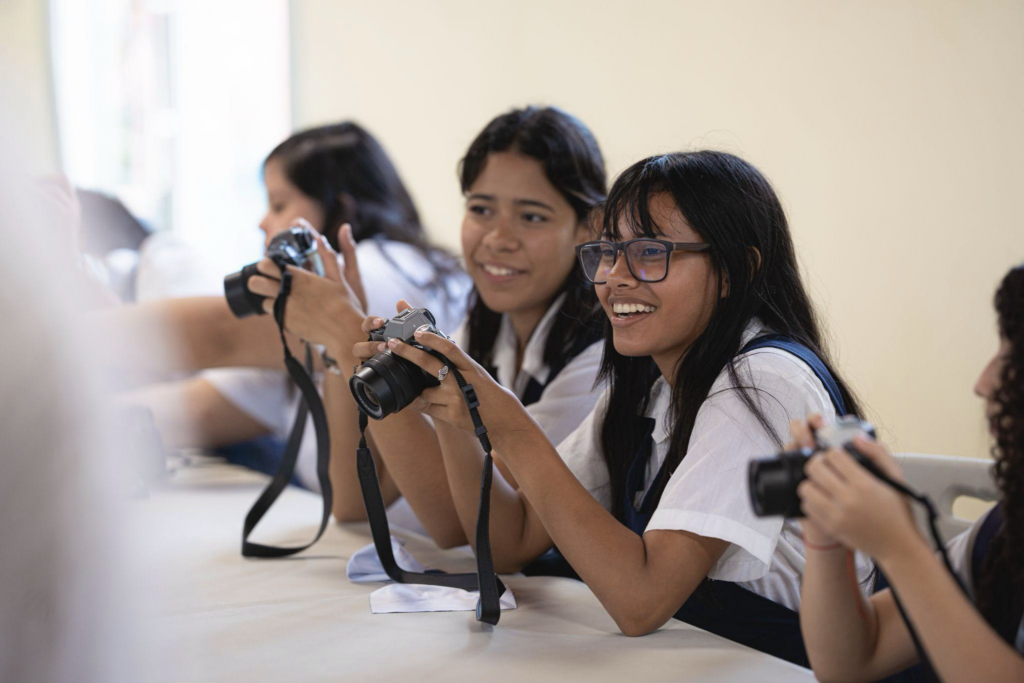
For most photographers, a camera is a tool for capturing the world around us. For Babita Patel, it became a way to help people see themselves differently.
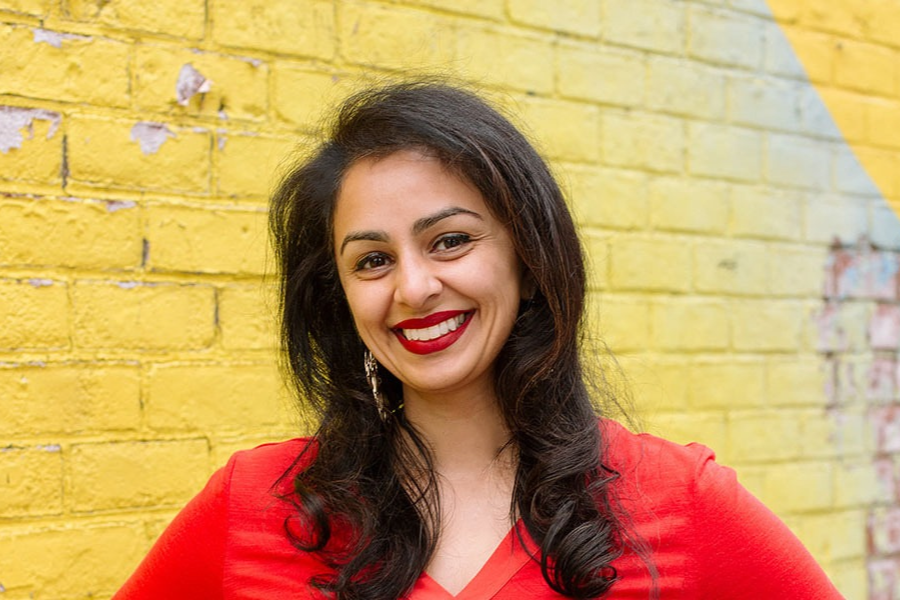
Patel is a photographer, humanitarian, and the Founder and Executive Director of KIOO, a nonprofit organization that uses photography to build confidence, leadership skills, and new perspectives in young people around the world. KIOO’s approach begins by teaching photography to girls, who then step into the role of teachers themselves, passing those skills on to boys in their communities. It’s a simple idea with a much bigger purpose. By putting girls behind the camera and, eventually, at the front of the classroom, KIOO creates opportunities for them to discover what they’re capable of while giving the people around them a chance to see it too.
Patel’s own path to KIOO wasn’t exactly a straight line. Her career began in advertising before photography, travel, and humanitarian work gradually led her toward a very different kind of storytelling. An assignment in Haiti ultimately planted the seed for what would become KIOO and a mission that has since taken her and the organization to communities around the world.
Last month, that work continued with a KIOO workshop in Honduras. ProGrade Digital was proud to support the program by providing SD memory cards and card readers for the students and instructors who put photography to work in the field.
We spoke with Patel about the experiences that led her to KIOO, why photography is such an effective tool for building confidence, what happens when girls are given the opportunity to lead, and where she hopes to take the organization next.
“A girl discovers what she’s capable of through the lens of a camera.” – Babita Patel
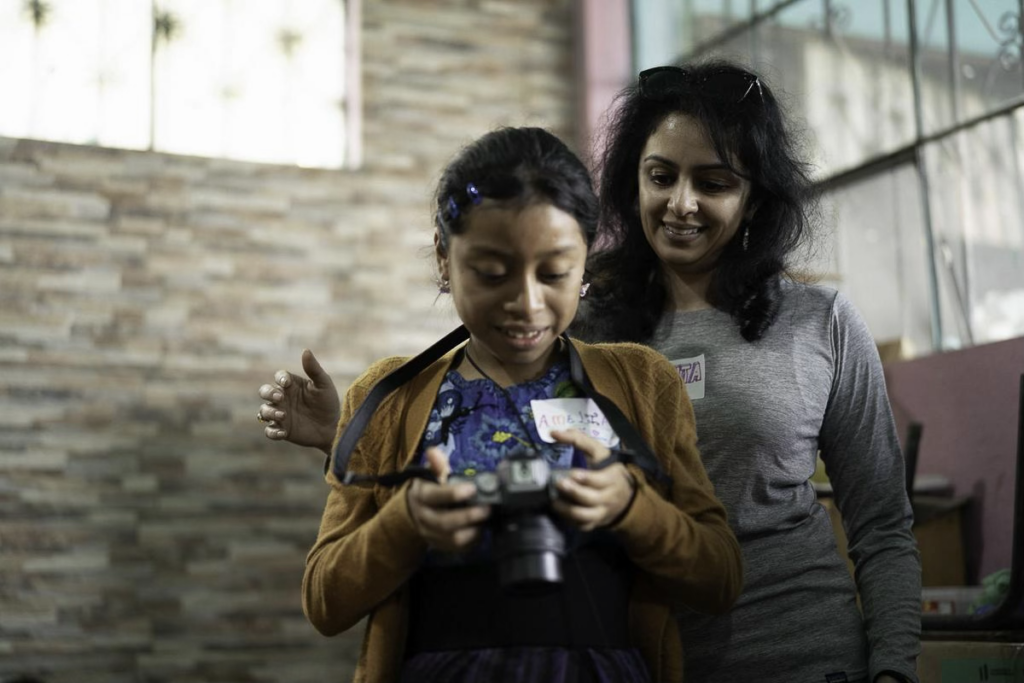
You started as a freelance and humanitarian photographer, with your work appearing in major outlets like HBO, BBC, Vice, and The New York Times. Now you’re the Executive Director and Founder of KIOO Project. Could you tell us more about that journey?
I started my career as an art director in advertising, working in corporate America, making TV commercials for Fortune 500 companies. But my career was flatlining, I was struggling financially, and my love life made me cry.
That’s when the panic attacks started. Scary ones, where I couldn’t breathe and my insides felt like they were trying to climb out of my body. When I was in the middle of one, there was no end in sight. A few times I genuinely thought I might die.
Travel was the only thing that promised relief. I figured if I was going to fall apart, I might as well do it on the other side of the world with no witnesses. So I found myself trekking to 19,500 feet around a sacred Hindu mountain in Tibet, frantically looking for divine intervention. Someone who would just fix me, no questions asked.
I walked off that mountain with nothing. Turns out God is like love. She doesn’t show up when you’re chasing Her. She smelled the desperation on me and kept her distance.
Weeks later, I had my moment. Sitting with my feet in Ganga, a sacred river in India, eyes closed, hands together, sun on my face, I got the message: stop fixating on yourself. The panic attacks would stop when I stopped attacking myself.
But my brain needed something to obsess over. If it wasn’t going to be me, maybe it could be other people. So I came back to New York to give instead of take. Along the way I added things that brought me joy: travel, photography, connecting with people. That’s how I found my reason for existing: helping people tell their own stories in their own voice.
These days I split my time between two things: traveling the world to capture images for other organizations, and traveling the world to teach girls to capture their own. The two are directly connected.
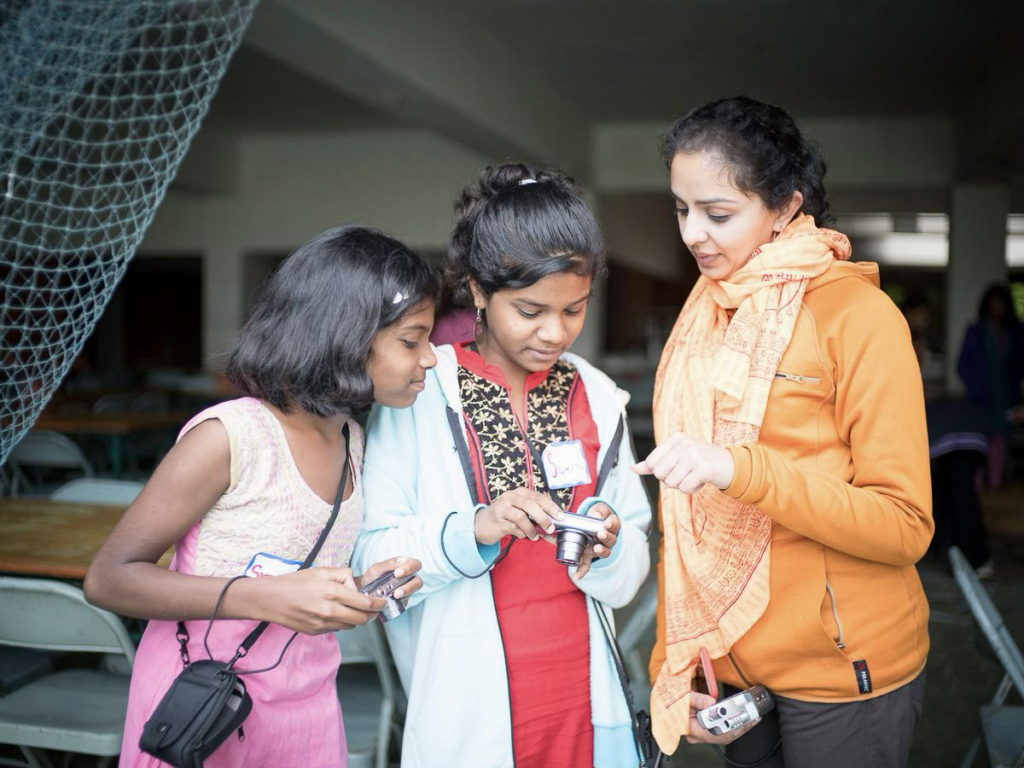
As the Founder, could you tell us a bit more about the organization itself? What exactly is KIOO and what is your core mission?
We believe girls are natural leaders. Our job is to create the moment where everyone around them – girls, boys, whole communities – gets to see that too.
We exist for the moment a girl looks at herself and sees her own power. And just as important, the moment a boy looks at her and sees a leader.
We get there through photography. We teach it to girls first, and then the girls teach it to boys. Girls take the lead. Peers, teachers, parents, whole communities watch them do it. And boys learn from girls.
We show up with cameras, a curriculum we’ve built ourselves, and a peer-to-peer teaching model made for communities that get underestimated. A girl discovers what she’s capable of through the lens of a camera. A boy discovers it too, by watching her use it.
What was the catalyst for starting KIOO? I understand the seed for the organization was planted during a very powerful moment you experienced in Haiti. Could you share that story with us?
I was on assignment in Cité Soleil, the largest slum in the Western Hemisphere, in Haiti, one of the poorest places on Earth. Trash littered the streets. Stagnant rainwater sat on the side, used as latrines. Sweat dripped down my spine. I snapped a picture of some kids playing soccer with a half-inflated ball, and all of them came running to grab at my camera to see themselves on the screen.
The novelty wore off fast and most of them darted off. One boy stayed behind, going face by face on the screen like he was checking them off in his head. He stopped at the last one. His own. He let out this burst of pure, giggling glee and ran off. Standing there alone, it hit me: for people who have survived on less than $1 a day, a mirror is a luxury. This kid only recognized himself by process of elimination. He knew every face that belonged to a friend, which meant the one left over had to be him.
I was stunned. I’d never considered that someone could go through life without knowing their own face. But photography can change that. It lets a girl see herself and her world differently. And once she can express herself and build real skills, she can start showing up differently in her own life and her community. And thus, the seed for KIOO was planted.
You often talk about shifting society from an “us versus them” to an “us and them” mindset. How does KIOO fit into this mission?
A lot of our problems right now come from this idea that it’s “us versus them.” That we “other” people for arbitrary reasons. That if someone else has something, it must mean we’re going without. But that’s not how it works. A rising tide lifts all boats.
Our peer-to-peer model is built around that idea. When a girl gains something, it doesn’t stop with her. It gets passed on, and everyone benefits. For decades now, there’s been a lot of international investment in education, skills training, and economic opportunity for women and girls. Meanwhile, programs for boys have basically flatlined. KIOO proves you don’t have to choose. You can invest in girls and bring boys into the room to learn too.
Real change doesn’t come from working with only one part of a community. It comes from including everyone, so the benefits reach everyone.
In your model, girls learn photography and then teach it to boys. Why is it so important that the boys become the students?
Pretty much everywhere, boys grow up seen as the natural leaders, while girls get overlooked, sidelined, talked over. That’s not because it’s their natural place. Studies actually show women lead just as well, if not better, than men when given the chance.
So we wanted to do two things: give girls that chance, and just as important, put them in front of boys long enough for the boys to actually see them leading. Because if girls are only proving themselves to each other, nothing changes out in the world.
Something that happened in our India program says this better than I can. Rajesh had a reputation for being “naughty” (a direct quote!) in school. He didn’t listen to girls, talked over them in class, and refused to teach them how to fix the school bicycles because he figured they’d just break them again. Then he learned photography from a classmate who happened to be a girl. He listened as Ganga walked him through techniques, explained the assignment, even critiqued his work. It didn’t stop with the workshop. He started listening to girls outside of it too, even when one of them explained a math problem to him. That never happened before.
You work in communities all over the world. What usually happens when you hand a girl a camera and the authority to lead for the first time?
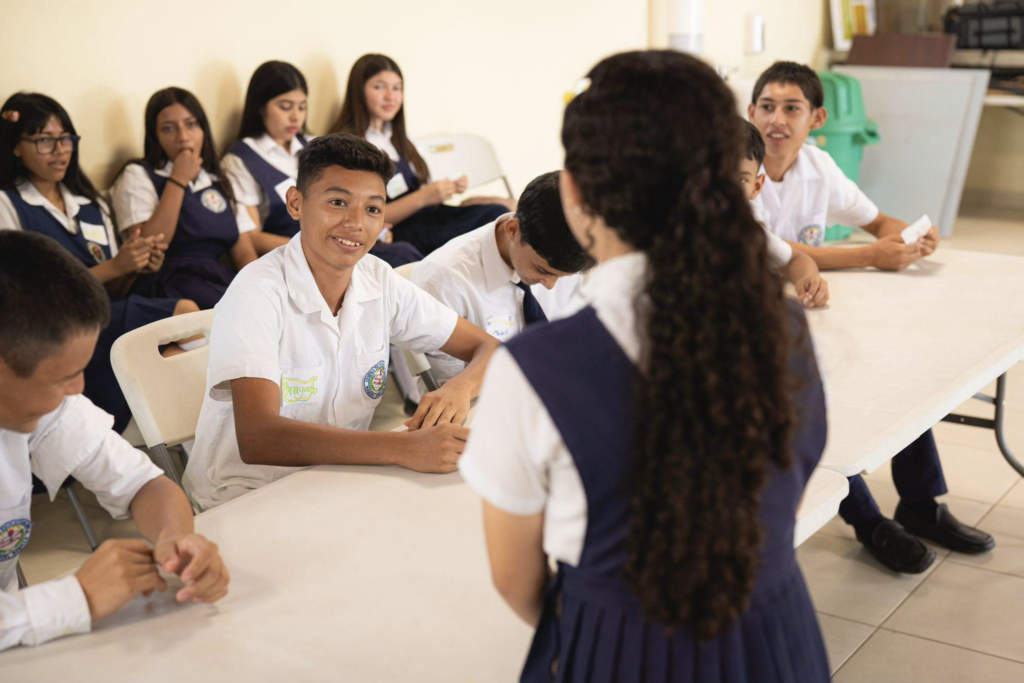
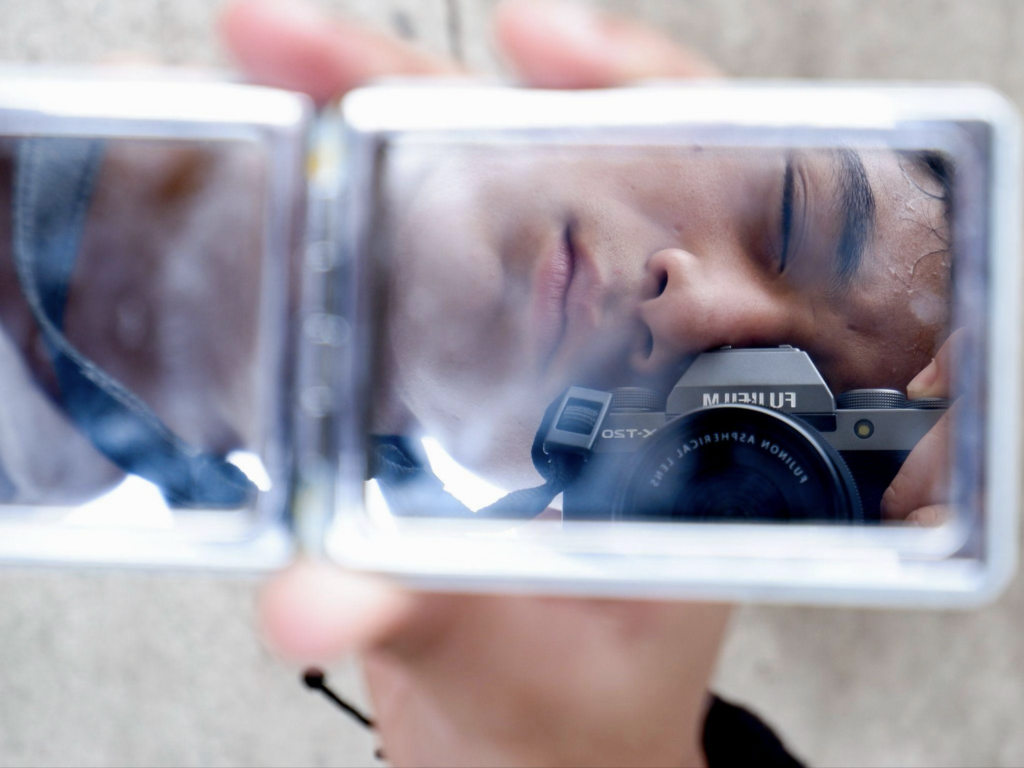
We just launched our tenth program, in Honduras, and at this point it’s almost comical how well I know the arc of a workshop before it even starts. Day one, the girls are shy. Afraid to speak up, afraid their answer might be the “wrong” one. Some of them will even write their names tiny in the corner of their name tag, like they’re trying not to take up space. But over the week, through the curriculum, through seeing themselves through a lens for the first time, through a group of strangers who flew in from another country and actually want to know what they think, something shifts. They start showing us who they really are. And who they are is fun, sharp, creative, full of opinions and dreams for themselves and their communities. The real turning point usually lands on day four, the self-portrait assignment, when girls who’ve spent their whole lives being told to judge how they look finally get to see themselves as beautiful through the lens of a camera.
For most of these girls, this is the first time they experienced an arts education, asked for their opinion, or treated like they have value exactly as they are.
Then it’s the boys’ turn, and that’s where it gets interesting. The naturally outgoing girls step up right away. It’s the quiet ones who surprise you. In Honduras, Kemilly was set to teach her section: tips for keeping the camera steady so shots don’t blur. The first time, she asked her outgoing friend Allison to help. Allison ended up teaching the whole thing while Kemilly stood there quietly. The next day, Kemilly asked for Allison’s help again. I looked her in the eye and said, “I know you can do this on your own. I believe in you. Until you believe it too, I’ll believe it for both of us.” Kemilly taught the entire section by herself, and honestly, better than our own KIOO teachers could have. Afterward she just giggled, kind of stunned at herself. Because when you actually give a girl the chance to shine, she takes it.
Out of all your workshops, is there one specific story or student that has stuck with you the most?
OMG! So many!
NEPAL:
All the girls were shy on day one, but Ayushma and Muna were especially quiet, barely speaking above a whisper. By the end of the week they’d opened up some, but we were worried about how they’d handle the second week, when it was their turn to lead the boys. So on the first day of teaching, we gave them a small job: hand out markers and name tags. About as low-stakes as leadership gets. Except Ayushma and Muna took total ownership of it. They rounded up every boy in the room, told them exactly what to do, and got stern when one boy was goofing off and didn’t put on his name tag.
UGANDA:
During the first week, we talked about traditional and non-traditional gender roles with the girls. They all agreed a woman could be a doctor, a teacher, an engineer. But when we asked if a woman could be President of Uganda, every single one said “no.” So we broke it down together: what traits does it take to lead a country, do women have those traits, and if not, what would it take to build them? By the end of the conversation, the girls had changed their minds. A woman could be President.
A week later, they brought that same conversation to the boys, who started out just as certain that a woman couldn’t lead the country. By the time the workshop ended, the boys changed their minds too. One conversation, during one photography workshop, and 50 kids walked away believing a woman could lead a nation.
ETHIOPIA:
During the portrait assignment, our students went out into the community to photograph people. Teshfanesh was photographing a teenage girl when a small crowd gathered around her, a few girls and one boy. I motioned for her to pull the boy into the shot too. The girls giggled as she photographed the two of them together.
Later, back in the classroom, Teshfanesh picked the photo of the girl and boy together as her favorite of the whole assignment. In Ethiopian culture, women and men generally don’t interact in public. They don’t walk together, sit together, talk together. Teshfanesh had grown up assuming that distance as a kind of hierarchy, as though it meant she wasn’t equal to boys. But one photograph of a girl standing next to a boy told her something different. They could stand side by side. They were equals.
KENYA:
Jane was locked in all week, taking gorgeous photos, right up until the last day: the self-portrait assignment. I noticed she wasn’t shooting anything and went over to check on her. “Are you okay? You don’t want to take any self-portraits today?” She teared up, looked away, and said, “No. I’m not beautiful like the other girls. I’m too ugly to take a picture of.”
We spent the rest of the day on one idea: when you’re doing something you love, that’s when you’re beautiful. Jane loves to knit, so we found long blades of grass and wove them together, adding in purple flowers, her favorite color. We photographed her weaving. When it came time to caption her self-portrait, Jane wrote: “My friends at KIOO…told me to be a courageous person, and I am beautiful the way I am.”
How does learning and teaching photography translate into real-world self-confidence for these girls?
According to the World Bank, girls lose 30 percent of their self-confidence by age 14, worldwide. It tracks with puberty, when girls start questioning themselves, their bodies, and their place in the world, all while getting bombarded with messaging from social media and their peers. That’s exactly the age we target, so we can give them a different way of seeing themselves and each other through the arts. And it works: girls in our program report a 69 percent increase in self-confidence. It matters beyond just how they feel. Research shows self-confidence built through the arts carries over into better math and science performance, plus soft skills like leadership.
When you look at the students’ photos, how does their perspective change from day one to the end of the program?
The biggest shift we see is their willingness to experiment. Day one, they’re so worried about taking the “wrong” photo that they don’t try anything beyond the obvious: standing at eye level, camera pointed straight ahead. But as the week goes on, as our teachers give feedback and the girls start to trust that we actually want them to succeed, they loosen up. They try new angles. They experiment with new subjects. They’ll stick with a shot until they get exactly what they wanted, the same way a professional would.
You can really see it if you compare the girls’ photos at the end of the week, after five straight days of learning and shooting, to the boys’ photos on their very first day ever holding a camera. Five days of growth against zero is a pretty stark difference, and it’s obvious in the images themselves.
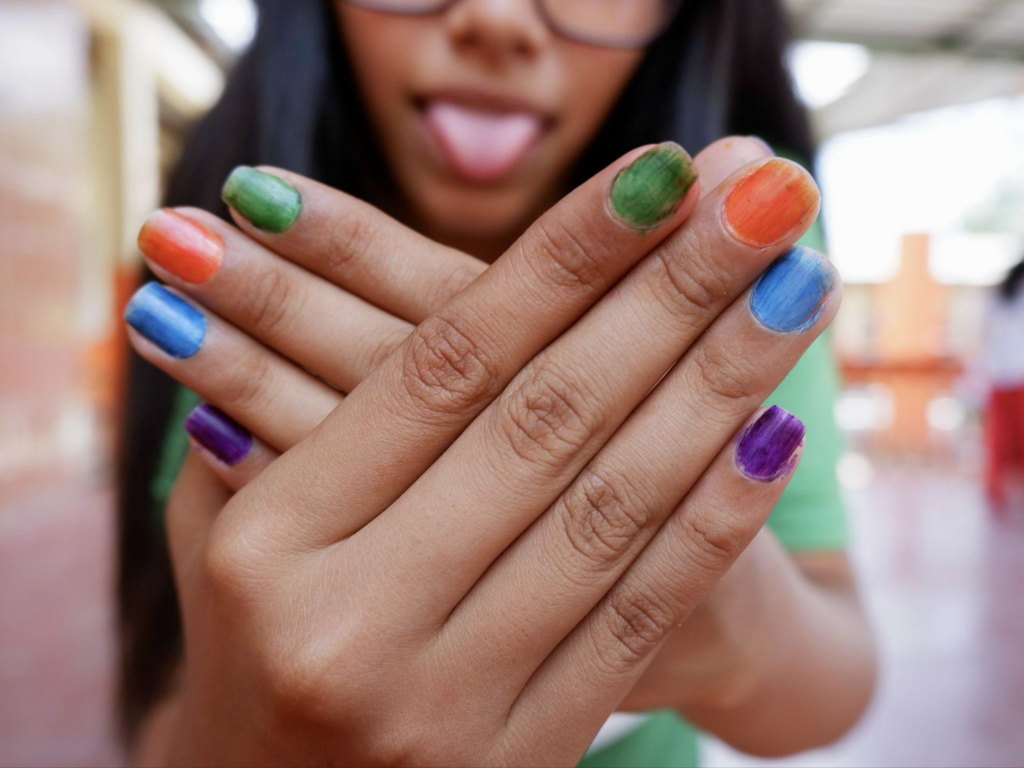
What is your ultimate vision for KIOO, and how can the photography community support your mission?
Pie in the sky? I want a KIOO workshop in every country in the world. Every community on Earth deals with gender inequality in some form, and every girl everywhere deserves to discover her own innate power. I’d also love to build an online platform where students from different workshops can see each other’s images. A girl in Cambodia seeing what a village in Ghana looks like. A girl on the Oglala Lakota Nation seeing the parallels between her life and one in India. A girl in Ecuador seeing the colors of a yurt halfway around the world in Mongolia.
Honestly, one of the things that keeps me going is watching the photography community respond to this work. Photographers are artists, creatives, people who feel things deeply, and there’s something magical about sharing the thing that fuels us with people whose lives it can genuinely change. I love how many ways people find to get involved. Teach a workshop. Connect us to a brand. Introduce us to a donor or an NGO who wants to partner on a future program. Point us toward a space to host a gallery show of our students’ work. Donate a print to our online auction. Whatever it is, I’d love to hear from you. Email me anytime at Babita@KIOOproject.org.
Is there anything else you would like to add or share with our readers?
Honestly, KIOO might be the most selfish thing I’ll ever do because I get more out of it than anyone else, including our students. Watching a girl discover what her own power fuels me for the rest of the year. But there’s another layer to it. When a photographer sees that same potential in our students, when they show up to support this work, it means something different. It makes the work feel truly seen by people who understand exactly what a camera can do. That reaction sometimes moves me even more than the students’ own breakthroughs do. I’ve seen the impact on the girls enough times to trust it completely. Watching someone from my own field recognize it too? That feels like magic to me.
This fall we’re launching a program with immigrant students in NYC, and next year we’re bringing KIOO to Colombia for the first time.
Looking Ahead
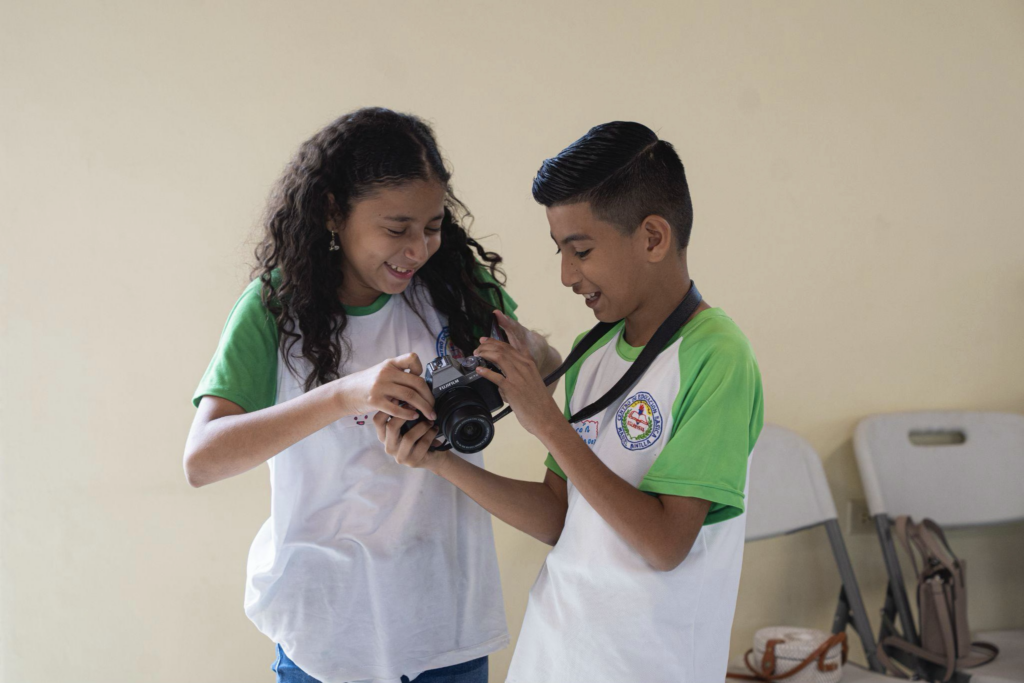
It’s easy for photographers to get caught up in the technical side of what we do. Megapixels, shutter speeds, lenses, storage, workflow. We are, after all, a community capable of having a surprisingly passionate argument about memory cards.
But KIOO is a reminder of what all that technology ultimately makes possible. A camera can give someone a way to explore an idea, communicate a point of view, document a community, or simply see herself differently for the first time. And when a student goes from learning those skills to standing in front of her peers and teaching them, photography becomes something even bigger than image-making.
That’s what makes KIOO’s work so compelling. The organization isn’t just teaching young people how to take better photographs. It’s using photography to create opportunities for girls to experiment, speak up, lead, and discover abilities they may not have realized they had.
For those of us already connected to photography, there’s something especially meaningful about being able to share the tools and knowledge we use every day with the next generation of image-makers. ProGrade Digital was honored to play a small part in KIOO’s Honduras workshop by providing memory cards and card readers that helped students capture, share, and learn from their own images.
And if Patel gets her “pie in the sky” wish, Honduras was only one stop along the way. Her vision remains to eventually bring KIOO workshops to every community around the world, connecting young photographers across countries and cultures through the images they create.
To learn more about KIOO, its workshops, and ways the photography community can support its mission, visit KIOOproject.org.